Parthenope; my brilliant sister

Picturehouse Central

I already liked Paulo Sorrentino’s films and I’d seen his last paean of love to Napoli, the ironically named Hand of God produced by Number 10 productions. So a new Sorrentino film showing in London at my favourite cinema Picturehouse Central was a must to see on the big screen; not least because Sorrentino’s films are always arrestingly visual

A Picaresque Pizza of a movie? As ever with a brilliant Italian film director there are several layers of intricately confusing threads from various stories. We are introduced to Parthenope, our protagonist and the original mythic name of Napoli, at birth in a brilliantly filmed, absurd opening shot, telling us much more than we realise as it is drenched with mythical symbolism, encompassing the Bay of Naples. Exactly like the original Parthenope our contemporary goddess is birthed within the waters breaking over Napoli.
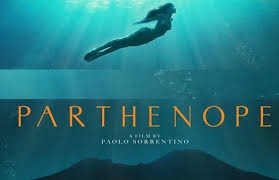
Like a cross between Caravaggio & Fellini this amacord Napoli provides us with startlingly brilliant images, and leaves it up to us to decode whatever sacred and profane meaning lies behind its slow dazzle; a sexual life aquatic involving both a fearless gangster who owns the city and a Mary Magdalene moment with a conclave-bound corrupt cardinal.

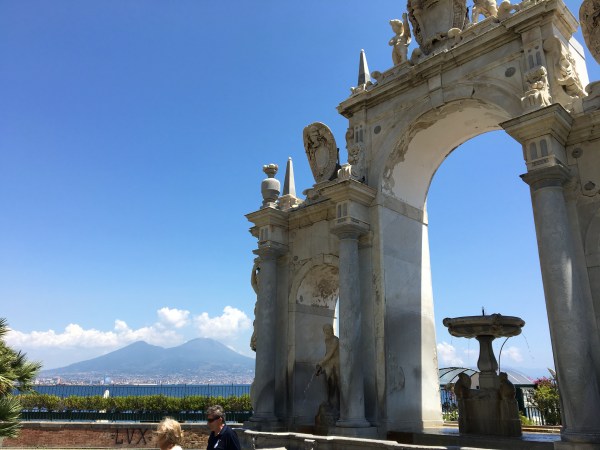
“See Naples and die” refers not to the cholera outbreak of 1973 shown as capable of stopping the funeral cortège of brother Raimondo, but to Napoli’s beauty which impressed Goethe 248 years ago when the Centro Storico was a world city with legendary views of the bay, Pompeii and its brooding volcano. We are given a deathless moment when death in a time of cholera means that Raimondo’s funeral is arrested by a combination of an extraordinary mechanical technology and a more usual public health lockdown.

The more you know about Napoli, Greek myths and film the more you will get out of this film. Like all those directors who started with UFA in Berlin, Hitchcock and the holy Billy Wilder, who is referenced here by the devilish Cardinal as the Anthropologist of “seeing” (which is what this film is about), Parthenope the film presents sumptuous visuals seemingly built around the life of Parthenope as child, beautiful seductive goddess and academic; a very discrete object of desire.

Elena Ferrante’s brilliant slow burn of a novel about Napoli, My Brilliant Friend is set amongst the poor who populate the centro storico with severely circumscribed vision. Yet Ferrante’s narrative arc is a classic post World War Two rags to riches through first generation academic success, achieved through perseverance not genius. Parthenope herself represents the inverse of extreme wealth, gratuitous beauty and intuitive genius wondering which labyrinth to wander down; haplessly seducing everyone. Rarely committing she remains mysterious whilst adoring only the professor and the writer who keep their distance. Eventually becoming a published academic alone again, or rightfully worshipped by her students. In Ferrante’s novel and Sorrentino’s film a trip to the Isle of Capri triggers the main narrative towards some kinds of closure.

Like a thief Sorrentino steals fireworks from Hitchcock, as well as having told us that we need to be seeing as though we are watching the silent movie masters. Oscar winner Thelma reports that Scorsese now asks “the shot, the shot; what happened to the shot?” Well Parthenope answers Marty with abundant shots requiring our thoughtful attention; no wonder American reviewers on IMdB throw multiple “don’t make me think” rotten tomatoes. It’s a film for patient European art house film buffs not hyperactive franchise movie brats. Even popcorn obesity is gently mocked at the film’s end. The film concludes that “At the end of life only irony will remain” but as Steve Martin mockingly reminds us in Roxanne, another film about an intelligent beauty, “Irony? We haven’t had any use for that since Marvel!”

The film ends on Via Parthenope itself as our reluctantly seductive goddess arrives at the Grand Hotel Santa Lucia to eat, pray and love in celebration of her storied retirement from academia, just as a boat load of Napoli FC fans pass in celebration of winning the 2022-23 Scudetto. With marvellous synchronicity I saw this film 4 days after Scott McTominay scored the goal that guaranteed Napoli its 4th Scudetto.

The immaculate conception of Napoli has finally given birth to a wondrous cinematic love letter. Cities aren’t born nor evolve obviously but what emerges from their urban chaos and creation is the complexity of life. The Neapolitan Sorrentino knows that everything is a metaphor and has given us glistening iceberg of refracted rays of light to enjoy. I wish that you make of it what you will. I did. See it, swim in it, then search through your own memories…

Fred Garnett 28th May 2025

References

Paulo Sorrentino

https://www.imdb.com/name/nm0815204/?ref_=dyk_trv

Parthenope (goddess)

Napoli FC

My Brilliant Friend; Elena Ferrante

see Naples and die” Goethe 1778

Cholera Epidemic 1973

https://www.thelancet.com/journals/lancet/article/PIIS0140-6736(74)93214-0/

UFA Babelsberg Studios

Billy Wilder (the anthropologist of seeing)

The 8 locations used in Naples that map to the story recommended by Visit Naples

https://www.visitnaples.eu/en/neapolitanity/tales-of-naples/all-parthenope-s-film-locations-8-places-to-discover-in-naples-with-paolo-sorrentinos-eyes

Featured post

Structure

Wednesday 20th October 2021

Theme

John was discussing the Hollywood 3 part film structure and used Casablanca as an example;

Beginning/Middle/End

Opening Scene “Round up the usual suspects”
Middle “I’m going to die in Casablanca”

END “we’ll always have Paris”

JOHN also mentioned Koyaanisqatsi as not having a 3-part structure

NOTES:
Kurt Vonnegut on “the shape of stories” 


Aristotle Poetics on the 7 dramatic structures; https://en.wikipedia.org/wiki/Poetics_(Aristotle)

Joseph Campbell – The Hero With 10000 Faces (a meta view of cultural
“myths” across all peoples) George Lucas based Star Wars on this book

Most European Art House Cinema challenges this structure. That is what makes it interesting…

Tzvetan Todorov is a Bukgarian who worked in Paris Tzvetan Todorov proposes a dialogical (transformative) structure
instead of the Hollywood linear structure…
https://en.wikipedia.org/wiki/Tzvetan_Todorov

Hitchcock, and Scorsese, are expert at visual exposition… Marty often with music

The script for Casablanca was being revised day by day, it wasn’t finished when they started and was constantly revised as they went along.
So Casablanca had no structure, just daily scripts…
So ere the visas a “McGuffin” as Hitchcock calls it?

SOME FILMS WE MENTIONED

Sophia Loren’s latest film made last year sounds like a remake of A Special Day mentioned by Christopher. It is called The Life Ahead and is directed by her son, which is why she made it…

Dunkirk by Christopher Nolan 3 time structures A Week (Land) A Day (Sea) An Hour (Air)

MIRROR by Tarkovsky mentioned by Carole


Which reminded Fred of Russian Ark – a one shot film around the Hermitage and all of Russian history


WE Mentioned The Beguiled with Clint Eastwood (by Don Siegal – who worked on Casablanca) AND Sofia Coppola (2017)

Fred mentioned Until The End of The World filmed on 7 continents


AND La Cecilia filmed by Jean-Luc Comolli to NOT have a resolution, and so for the audience to debate what they think the end of the film meant (whole film free on YouTube!


Featured post

History of Technology in Films

A History of Technology through Film

YouTube Playlist of Films for this session;

Introduction;

Olympics 2012 Opening Ceremony +++ (Boyle, Boyce, Jennings)

Main films I used;

Brazil; Terry Gilliam

Why? Set “somewhere in the twentieth century” this is a film designed to reinvigorate the myth of Orwell’s 1984 and was filmed in 1984. Terry Gilliam said he would come and talk to my students about it

2. RoboCop Paul Verhoeven

Why? About the privatization of the City (Detroit) using technology. I used it when Thatcher was trying to privatise the Welfare State. The back story of RoboCop is the privatization of the Police Force in Detroit. Features Robots and Cyborgs and always enthralled students
3. Koyaanisqatsi XXX & Philip Glass 

Why? A silent movie with a vigorous soundtrack which shows the Environmental Impact of Technology with a timeline from Nature to Cities to Wasteland in Space… Introduced Big History (from the beginning of time) to the “end of civilisation (always worked with my students)
4. Until The End of the World Wim Wenders  (German film maker influenced by French New Wave e.g. Kings of the Road)

Why? The ONLY film that shows the Technology Innovation Process (4i’s) as I taught it, the only film tracing the arc of a technology from Idea to Impact.

Films I would use now

The Man With The Movie Camera (the Industrial Revolution in 9 minutes)

Brassed Off; Piece Hall Halifax – the Lunar Men Jenny Uglow

I Giant Leap My Culture…

Background

I taught Politics, Political Science 101 and then Political Philosophy and European Political Systems in the USA (Boulder, Colorado) for 2 years. I helped set up the Politics and Film project with Stan Brakhage because we taught a “polity” approach to Politics rather than the UK “institutions” approach. Polity argues that culture is as important as institutions so we showed various films to reveal the culture of various countries we were teaching about; UK, France, Germany, Italy, Russia. From 1982-1984 I spent two years teaching Computing, Business Informations Systems, maths and related subjects including “people, technology and work”

In 1984 the UK government under Kenneth Clark deemed 1984 the year of IT and the BBC launched the BBC B Micro with a plan to put one stand-alone computer into every school and a supporting programme of educational broadcasting teaching people how to use it, by teaching BASIC programming and how a computer worked because using a computer wasn’t user-friendly it was still nerdy and technical; very appropriate for a technical college (descendants of the 19th century Mechanics Institutes)

Will Tomorrow Work? November 1984

In 1984 I asked myself if I could use my teaching experience in both Politics and Computing in some way and decided that I could examine “the social impact of technology” and, inspired by the BBC, wrote Information Technology and Society looking the forthcoming impact of computing technology, largely through the advent of “personal computers” like the BBC B, the Amstrad word processor and the much more expensive IBM PC (M$) and Apple 2. These were all very technically clunky but, like the Analogue technologies of the 60s SLR cameras, take-recorders, record-players and Arriflex and Bolex 16mm cameras (as well as 8mm cameras), were affordable if individuals wanted to buy them. When Alan M Sugar launched his Amstrad WP the market for WP was 20000 in the UK but he sold 80,000 in the first year including printer. Personal computers changed the market for computers from very large companies to, potentially everybody.

In 1970 when I started on a maths degree we had a computing option. All degree students in London shared just the 1 “mainframe” computer between them and the input for your programmes was taken by motorbike courier to ILECC in Bloomsbury and returned 2 days later. If you’d made one mistake it could take days to debug it.

Interestingly if you are a Londoner the first office computer was the LEO, Lyons Electronic Office built by the Lyons Corner house in 1951 which, eventually was spun off to become the first British Computer company (Ferranti/ICT/ICL) which represented the first commercial, rather than military application of computers. Nippy by name…
Social Impact of the Industrial Revolution
Danny Boyle; Olympic Opening Ceremony London 2012 (Technology History as a shareable “Narrative”) Great Man, Great Inventions, heroic change… (Jobs, Apple 4 Apples)
Brunel and the Industrial Revolution;

A filmic confection by Danny Boyle, Frank Cottrell Boyce and Humphrey Jennings

Pandemonium: The Coming of Technology as seen at the Time (Visceral History)

Reframed as a narrative for our simplified understanding;

the Industrial Revolution as Britain becoming a great economic power

Brunel as the great engineer of that Industrial Revolution.

Actually he was a great engineer but his lasting legacy, the social impact of his world, has been “railway time” and international time zones not his dialogical engineering…

Brunel was a “prodigy” like Mozart or McCartney because he was following in his fathers footsteps, the families craft skills were engineering…
Dziga Vertov; The Man With The Movie Camera 1927 (soundtrack by The Cinematic Orchestra)

What Did The Industrial Revolution Look Like At The Time?

Awakening to the Day 2) Going to Work 3) Working 4) Leisure time 5) Down time; drinks and chess…
Technological Innovation Process or The 4 i’s

i 1 ideas (thoughts). (learning)

i 2 inventions. (theories). (Heutagogy)

i 3 innovations. (technologies). (Education)

i 4 impacts. (times). (Social structures)
BUT WHERE DID THE INDUSTRIAL REVOLUTION COME FROM?

Bill Gates; The Road Ahead 1895
BRASSED OFF and Halifax Piece Hall The moment of transition from a craft-based culture

SOCIAL CHANGE COMES FROM IMPACTS NOT Inventions or INNOVATIONS

The 2nd Order Impacts of technological innovations (both positive – public transportation – and negative – death by fuel poisoning in Catford AND the Anthropocene of course)

See my NSU theory based on Kondratieff… Whose “meta-technology” theory only runs from 1771

Brazil and the Social Impact of Surveillance Technologies… 1984

Made by Terry Gilliam “somewhere in the 20th Century” to replace the failing myth of Orwell’s 1984

“Orwell was wrong” Margaret Thatcher “I’m writing a book called 1948” George Orwell about Room 101 at the BBC..,.
Longitude represents the shift from nature-centric thinking, such as by Humboldt, Kropotkin and the European alchemists lead by Erasmus, John Evelyn and Antrobus, to techno-centric thinking. This essentially flowed from Charles II (the Gambling Man as Jenny Uglow calls him) establishing the Royal Society in 1660 and shutting down thinking into the singular “Great Man” thinking of the newly introduced scientists and the so-called “scientific method” and it’s simplistic monocultural thinking, from which we have been bequeathed the Anthropocene.
Koyaanisqatsi – the systemic onslaught of technology (the Industrial Revolution) on the planet… The Anthropocene movie… Based on Big History
Where does technology come from?

Definitions; tool, augmentation, system, “order imposed on nature” (embodied learning) arguably human intelligence comes from our dialogic interaction with nature and what we learn from it. This learning can become “embodied learning” in our tools from which we create a shared “cultural DNA. This has recently been put forward as the through “Wired for Culture by Mark Nagel…

Who’s Afraid of Roger Rabbit?
RoboCop

Big History (Origin Stories, The Dawn of Everything,

Hugo

La Ciotat

Melies

AND Yoneji Masuda Managing in the Information Economy…

Blog at WordPress.com.

Up ↑

Design a site like this with WordPress.com
Get started